eLearning Design & Development
28 Minute
eLearning 2024: Top 10 Predictive Trends in eLearning Gamification


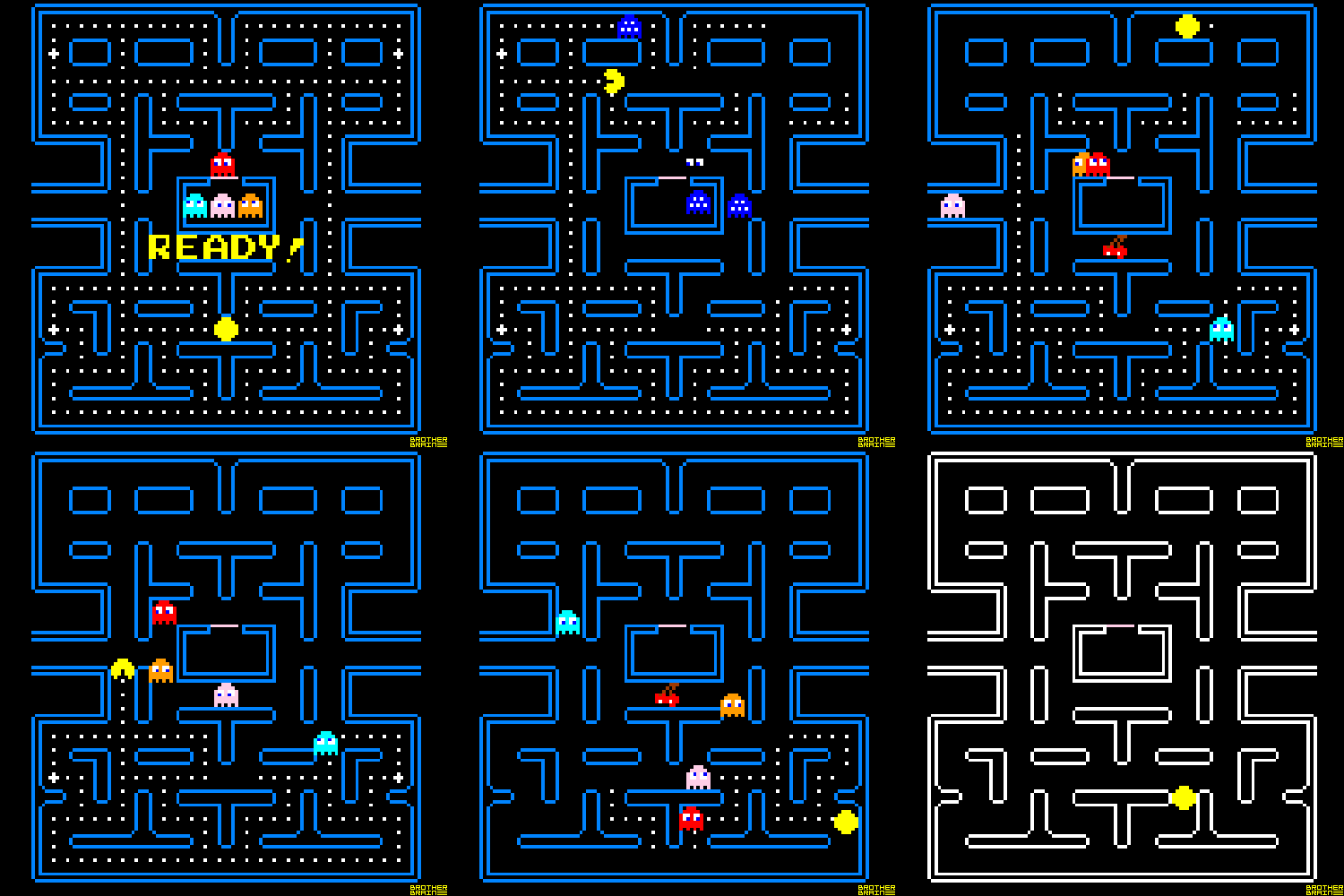 Recall Pac-Man, the iconic arcade game where a hungry, yellow character navigates a labyrinth, devouring pellets and dodging ghosts.
This seemingly simple game is, in fact, a powerful metaphor for the journey of eLearning gamification. As Pac-Man progresses through the maze, learning designers navigate the intricate pathways of designing, developing, and delivering gamified eLearning experiences.
The goal is not just to ‘complete’ the content but to make the journey rewarding, engaging, and enriching for the learner, turning the learning path into an adventure of discovery and achievement.
Explore: Learning through Play: Edutainment and the art of making learning fun again!
What is Learner-Centric Gamification in eLearning and Why is it Vital?
In the context of eLearning creation, learner-centric gamification means designing educational experiences that are not only interactive and engaging but also deeply attuned to the learner’s needs, preferences, and emotional journey.
It’s about crafting learning experience that isn’t merely informational but transformational, using gamification as a tool to make learning resonate on a personal level.

Future Trends and Strategies for Effective Gamification in eLearning:
#1 Emotional Analytics as a Guide
Future eLearning platforms may implement tools like facial recognition and mood tracking to gauge a learner’s emotional state. For example, if a learner appears frustrated, the system could offer a motivational message or a simpler explanation to help them through a tough topic. This real-time emotional feedback ensures that the content adapts to keep learners motivated and engaged.
#2 Culturally Inclusive Content
Future gamified eLearning will likely feature a broader range of culturally diverse avatars, scenarios, and storylines. For instance, a history lesson could include interactive stories from multiple perspectives around the world, not just the widely known narratives. This approach ensures that learners from different backgrounds see their cultures represented and valued in their learning journey.
#3 Neuro-Gamification for Deeper Learning
Utilizing data from neuroimaging or brainwave-scanning technologies, eLearning platforms might adjust content presentation based on a learner’s cognitive load or stress levels.
If a learner is struggling with a concept, the system could change the complexity of the information or the mode of delivery, switching from text-based to video or interactive simulations, to better suit the learner’s current cognitive state.
#4 Integration with Daily Life
Imagine learning content that integrates with your daily activities, turning routine tasks into learning opportunities. Future eLearning will blur the lines between ‘learning’ and ‘doing,’ making the acquisition of knowledge and skills a more organic part of the learner’s life.
Future eLearning could sync with everyday objects and tasks through the Internet of Things (IoT). For example, a cooking app might turn a routine dinner preparation into a lesson on chemistry and nutrition, or a fitness tracker might link physical activities to courses on health and biology, making learning an integral part of daily life.
#5 Ethical and Value-Driven
Gamified eLearning will likely start incorporating moral dilemmas and ethical decision-making scenarios. Content creators will design experiences that encourage positive behaviors, empathy, and social responsibility, shaping not just more informed but more conscientious individuals.
For instance, a business simulation might reward players not just for profit but for ethical decision-making, community impact, and sustainability, promoting a more holistic view of success.
#6 Achievement Beyond the Platform
Future gamified content won’t just reward learners within the course; it will recognize their achievements in a broader context, linking with digital badges and portfolios that showcase their learning journey to employers and peers worldwide.
Learners might earn digital badges for soft skills like teamwork and problem-solving, which they can display on professional networks like LinkedIn. This approach not only motivates learners but also helps them translate their virtual achievements into real-world career opportunities.
#7 Adventure-Style Game-Based eLearning
Moving away from traditional quizzes and tests, future eLearning content will feature assessments that are adventures in their own right, challenging learners to apply what they’ve learned in dynamic and interactive scenarios.
For example, for Environmental, Social, and Governance (ESG) eLearning module, adventure-style gamification can take learners on compelling quests to solve real-world challenges. This could involve a quest that immerses the learner in scenarios ranging from revitalizing a polluted city to negotiating sustainable practices with a fictional corporation. As they progress, they unlock the story of a world slowly moving towards sustainability, with their actions directly influencing the narrative’s direction.
The impact of such a quest is to inspire learners to think critically and creatively about real-world issues. Instead of memorizing ESG standards or guidelines, they’re encouraged to explore, experiment, and learn from the outcomes of their decisions. This approach not only deepens their understanding of the topic but also ignites a passion for self-learning and discovery. They’re more likely to seek out additional information, engage in discussions, and apply what they’ve learned in their professional and personal lives, fostering a culture of continuous learning and improvement.
#8 Empathy in Teacher Training
eLearning will not just design for learners but also for educators, providing them with experiences that help them understand and leverage gamification in their teaching, leading to more effective and empathetic use of technology in education.
Teacher training modules might include virtual reality scenarios that allow educators to experience the challenges some students face, like dyslexia or attention deficits. This immersive experience fosters empathy and understanding, leading to more inclusive and supportive teaching strategies.
#9 Self-Sustaining Learning Loops
Future elearning will aim to create a self-sustaining cycle of motivation and learning, where each piece of content fuels the desire to learn more, making education a never-ending journey of personal growth and discovery.
This includes using adaptive algorithms to suggest new topics based on previously completed courses, and creating a personalised learning path that evolves with the learner. For example, after completing a course on basic coding, the system might suggest a project-based course on app development, keeping the learner engaged and curious.

#10 Personal Evolution as the Goal
Ultimately, the future of gamified eLearning is about facilitating personal evolution. Each course, module, or activity will be designed not just to teach a skill or impart knowledge but to contribute to the learner’s ongoing personal and professional journey.
eLearning platforms might integrate with life-coaching apps to align educational goals with personal aspirations. For example, if a learner aims to become more confident, the system could suggest public speaking courses, provide feedback on progress, and encourage reflection on personal growth, making learning a journey of self-improvement.

In Summary
As we envision the future of eLearning creation, it’s clear that the integration of gamification will play a pivotal role.
However, for gamification to be truly effective, it must be deeply human-centric, focusing on creating experiences that resonate, engage, and inspire. By understanding and catering to the human aspect of learning, gamified eLearning content has the potential to transform not just how we learn but how we live, work, and grow in an ever-changing world.
View this post on Instagram
How Can We Help?
Aiming to bridge the skills gap in your organisation with a customised learning strategy?
Connect with us today to discover how our services can become a cornerstone in your plan to close the skills gap. Tailored specifically to resonate with your corporate culture and objectives, our eLearning design and development solutions provide targeted learning experiences designed to empower your employees, fostering adaptability and growth while contributing to your overall success in narrowing the skills gap.
Get in touch with us now to uncover the potential of a value-driven approach tailored for your needs.
Reach out via email at hello@visuerlab.com or click here to schedule a call to discuss how our eLearning design and development expertise can benefit your organisation.
Tagged with :


